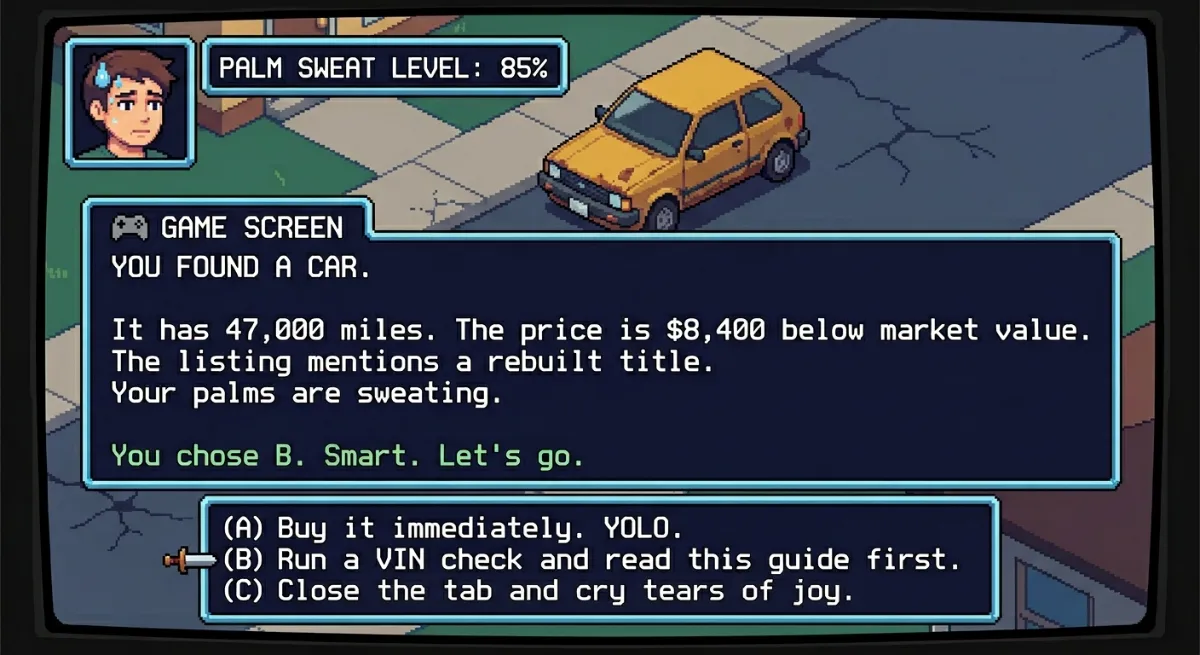
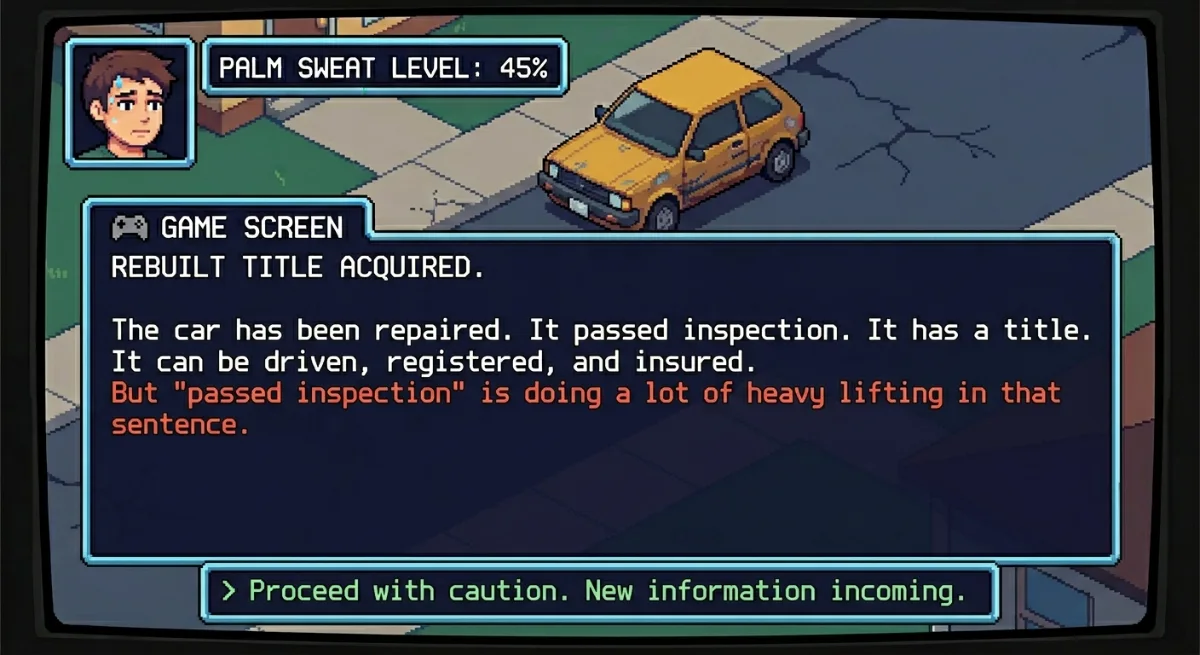
The practical difference is risk and effort. A salvage purchase requires mechanical expertise (or a very trusted mechanic), access to parts, and patience with the inspection process. A rebuilt purchase shifts that risk to whoever did the repairs, and the question becomes: How well were they done?
Can You Insure a Car with a Salvage or Rebuilt Title?
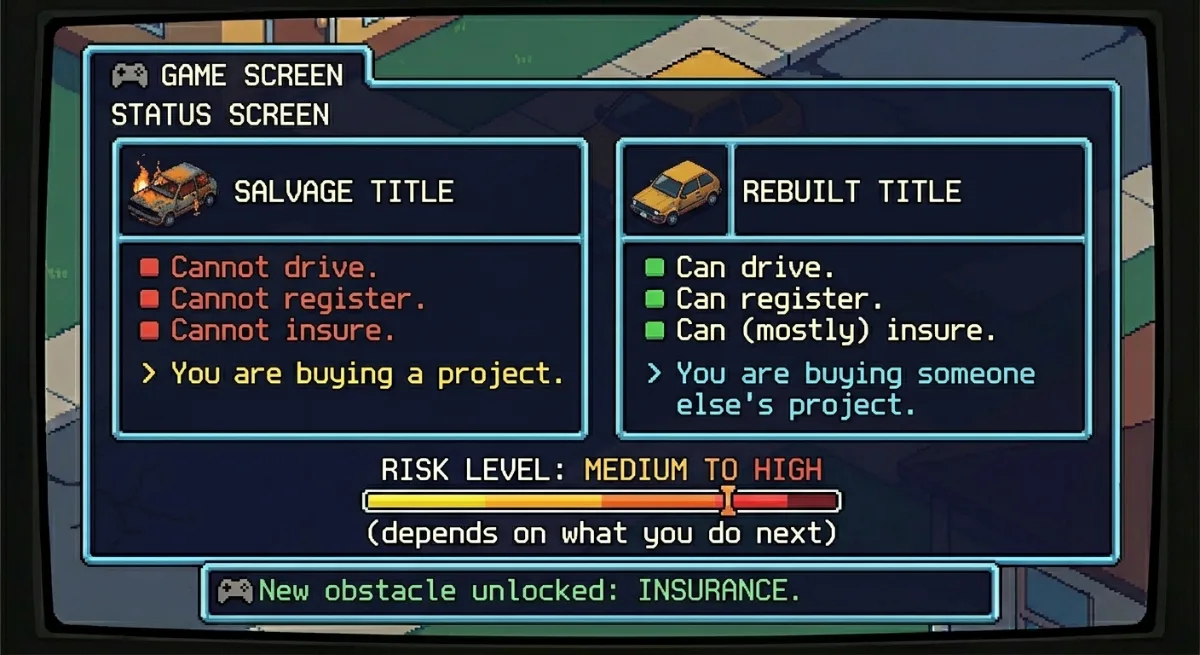
Salvage title: Most insurance companies will not issue a standard policy for a salvage-titled vehicle because you cannot legally register or drive it. Some insurers will offer a limited "storage only" or "comprehensive only" policy to cover the vehicle while it sits awaiting repairs. Liability and collision coverage are typically not available until the vehicle has a rebuilt title.
Rebuilt title: Most major insurers will cover a rebuilt-title vehicle, but often with restrictions. Liability coverage (which covers damage you cause to others) is usually available at standard rates. Collision and comprehensive coverage (which covers damage to your own vehicle) may be limited or more expensive. Some insurers apply a reduced valuation, meaning they'll pay out less for a total loss on a rebuilt vehicle because the title history already depresses its value.
Before buying any rebuilt-title vehicle, call your insurance company and confirm they'll cover it at a rate you find acceptable. Shopping around is worthwhile, because coverage terms and pricing for rebuilt vehicles vary more between insurers than they do for clean-title cars.

How a Rebuilt Title Affects Resale Value and Financing
A salvage or rebuilt title permanently reduces a vehicle's market value, even if the repairs are flawless. Industry estimates vary, but expect a 20% to 40% reduction in resale value compared to the same vehicle with a clean title.
This discount persists for the life of the vehicle. Every future buyer will see the salvage history on the title, and every dealer trade-in evaluation will factor it in. Financing is also harder, as many banks and credit unions will not issue auto loans for salvage or rebuilt vehicles. Those that do typically charge higher interest rates.
This is not entirely bad news for buyers. The same depreciation that hurts resale creates the buying opportunity in the first place. If you plan to keep the vehicle long-term and don't care about resale, a well-repaired rebuilt vehicle can represent genuine value. The math works best for vehicles you intend to drive until the wheels fall off, not those you'll trade in after three years.

How to Check If a Car Has a Salvage or Rebuilt Title (VIN Lookup)
Every vehicle has a unique 17-character Vehicle Identification Number (VIN) that tracks its history from the factory through every title transfer, insurance claim, and registration event. Running a VIN check is the most reliable way to discover whether a vehicle has a salvage or rebuilt history, and to understand exactly what happened to it.
The NMVTIS is the federal database that tracks title brands, including salvage and rebuilt designations, across all 50 states. It's administered by the Department of Justice and is the most authoritative source for title history. Approved data providers offer NMVTIS-based lookups, typically for a few dollars per search.
Commercial VIN Lookup Services
Platforms like ClarityCheck, Carfax, and AutoCheck query NMVTIS data along with additional sources, such as insurance records, auction data, service histories, and recall information, to build a more complete vehicle history report. These reports show not just whether the vehicle has a salvage title, but what caused the total loss, when it happened, and where the vehicle has been registered since.
Free Options
The National Insurance Crime Bureau (NICB) offers a free VINCheck tool that searches theft and salvage records. It's limited compared to paid services but catches the most critical flags.
Always run a VIN check before purchasing any used vehicle, not just ones you suspect of having title issues. Unscrupulous sellers sometimes "wash" titles by re-registering a salvage vehicle in a state with looser reporting requirements, effectively erasing the salvage brand from the visible title. A thorough VIN lookup catches title washing that a simple title review would miss.

State-by-State Salvage Title Rules
There is no single federal standard for when a vehicle becomes "salvage" or what inspection is required to make it "rebuilt." Each state sets its own rules, and the differences can be significant.
Total loss threshold: The percentage of market value at which an insurer must apply for a salvage title varies. New York uses 75%. Texas uses 100% (the repair cost must exceed the full value of the vehicle). Iowa uses a flat dollar amount in some cases. The same damage on the same car could produce a salvage title in one state and a clean title in another.
Inspection requirements for rebuilt titles: Some states require a thorough physical inspection by a state-certified mechanic or law enforcement officer. Others accept a simple document review or a self-certification by the repair shop. Georgia requires a "rebuilt inspection" that checks structural integrity, safety equipment, and emissions compliance. Other states have minimal requirements. The rigor of the inspection directly affects how much confidence you can place in a rebuilt title issued by that state.
Title branding terminology: States use different terms. "Salvage," "rebuilt," "reconstructed," "restored," "revived," and "prior salvage" all exist as official title brands in different jurisdictions. When buying a vehicle that was titled in another state, verify what the specific brand means under that state's law.
Title washing risk: Because rules differ between states, some sellers move salvage vehicles across state lines to re-title them in states with weaker disclosure requirements. This is illegal but happens frequently. A VIN lookup that queries national databases like NMVTIS is your best protection, because it tracks the vehicle's history across every state it has been registered in.

So Should You Buy a Car with a Rebuilt Title?
It depends. The conditions that make it a good idea are specific and verifiable.
A rebuilt-title vehicle can represent genuine value if three things are true:
1. You get an independent pre-purchase inspection. Not the state inspection. Not the seller's assurance. Your own trusted mechanic, who checks the structural repairs, the frame, the electronics, and the components most likely to have been affected by the original damage.
2. You've run a full VIN check. You want to know what caused the total loss, how severe the damage was, where the vehicle has been since, and whether the title history is consistent. ClarityCheck's VIN lookup pulls from NMVTIS and additional insurance and auction sources so you get the full picture.
3. You're a keeper, not a flipper. The 20–40% resale penalty is permanent. If you're planning to drive this vehicle for years and don't need to finance it, the math can work strongly in your favor. If you're planning to trade it in within three years, the discount at purchase rarely covers the discount at resale.
The buyers who get burned on rebuilt-title vehicles are almost always the ones who skipped step one or step two. The buyers who get a great deal are usually the ones who did both.
Run your Clarity Check VIN Lookup now for bonus points!