How to Identify a Fake Text Message (and Trace the Number)
Here's how to identify a fake text message in seconds, plus how to potentially find out who is behind the number.
Scam Alert
Claire Kellerman
Sep 8, 2026 • 6 min read

Medicare fraud calls are the single most reported scam targeting Americans over 65. The FBI's elder fraud report puts the average loss per victim over 60 at $33,000. If someone calls claiming to be from Medicare to offer new benefits, confirm your card number, or ship you free equipment, they are not from Medicare. This guide explains exactly what they're doing, how they got your number, and what to do about it.
You wake up and you’re old.
This is no metaphor. This is no cautionary tale. This ain’t one of them fable-type deals where you learn to step back and appreciate what you’ve got while you’ve got it. Nope, you’re just old. Yesterday, you went to sleep a young, hot, twenty-something. Now you’re a sagging skin-bag of bones and withering cartilage.
Be it witchcraft? Wizardry? Divine punishment for your myriad sins?
You may never know.
Light creeps in through the window, the kind that only enters rooms where someone retired lives, golden, thick, slightly stale. Your knees inform you, with great formality, that they have been meaning to have a word with you for some time and today is apparently that day. You smell of mothballs and past expiration dates. Somewhere in your house is a jar of hard candy that has been there since the late seventies. You don't know whose it was. You don't know how you got it. You just know it is yours now.
And then, of course, there's your ringing phone.
Somehow you know it's bad news.
You have been — somehow, magically, against your will — elderly for approximately 11 minutes, and someone is already calling about your Medicare benefits. You were not on this list yesterday. The universe recalibrated while you slept, quietly moved you into a new demographic bucket, and handed your phone number to people who are professionally enthusiastic about your healthcare coverage.
You answer. Your hands are wrinkled. Your knuckles are knuckle-y in a way you find objectively alarming. Your name, you now understand with deep and terrible certainty, is Agnes. Agnes. Like the oldest old lady name on the planet.
You are Agnes. You are a target. Welcome.

No. Medicare does not call you to offer new benefits. Medicare does not call you to confirm your card number. Medicare does not call you to tell you about a free back brace, a glucose monitor, or a program you've been specially selected for based on your age and ZIP code.
If someone calls claiming to be from Medicare, they are not from Medicare. The only question worth asking is how they got your number. The answer to that question is depressing enough that we've dedicated a whole section to it below.
You hang up. You go to your kitchen to make coffee. The machine has a touchscreen. A touchscreen. On a coffee maker. It has a scheduling system and an app integration and what appears to be, God help you, a preference profile. You press several buttons. Nothing happens. You press more buttons. It beeps at you, but nothing happens. You pour yourself a glass of water and stand there holding it like a person who has just been defeated by an appliance, which is, in fact, what you are.
Your phone rings again. This time it’s a different number, but the same calibrated, unhurried voice.
You hang up. Forty seconds later, a different number tries again.

The reason Medicare fraud calls work is that they sound like customer service. The caller is unhurried, uses your first name, references your actual provider, and leads with something that feels like good news, like a benefit you qualify for, a reimbursement you're owed, a card that needs updating before your coverage changes.
The FTC identifies several scripts that dominate the current landscape.
You qualify for a free back brace, knee brace, or continuous glucose monitor at no cost to you. They just need to confirm your Medicare number to process the shipment. If you provide it, your Medicare number gets used to bill the government for equipment you never receive, or receive but didn't need. The FBI calls this "durable medical equipment fraud" and it's a significant part of why healthcare fraud costs individuals and businesses an estimated tens of billions of dollars a year.
There's been a change to your plan. New benefits are available. You need to confirm a few details before the enrollment window closes. The urgency is calibrated carefully enough to move you, but not enough to alarm you. The deadline is always soon, but never a specific date.
Your Medicare card needs to be updated, reissued, or verified. Could you read the number on the front? This one is elegant in its simplicity. Your Medicare Beneficiary Identifier is the key to billing the government in your name. The call takes 90 seconds, but the fraud can take years to surface.
No ask yet, just a few questions about your healthcare experience. This call is gathering information for a future call, or selling what it learns to someone who will make the future call. It ends with your name, provider, medications, and general level of suspicion all logged in a spreadsheet somewhere. For a full breakdown of how to identify and block these calls before they reach you, see our guide to spam risk calls.
By 9 a.m. you've received the free equipment call, the new benefits call, and something that was probably the survey call if you'd stayed on long enough to find out. So far, it’s been four calls, 37 minutes of being Agnes, two glasses of water because the coffee machine is still winning.
The fourth call uses your first name twice in the opening sentence, which is a thing salespeople are trained to do.
Say, what's with kids these days? Their rap music and their apps and their touchscreen coffee machines? Whatever happened to a simple percolator? A modest, humble, analog percolator that did not require a preference profile?
Those truly were simpler times.

This is the part that makes people feel genuinely unsettled when they hear it.
The caller knows your name, your approximate age, your ZIP code, and sometimes your doctor's name before you say a single word. It feels like surveillance. Actually, it's a data broker subscription, and it costs about the same as a streaming service.
Data brokers – companies like Acxiom, Whitepages, and hundreds of smaller operations – collect publicly available information from voter registrations, property records, social media, loyalty programs, and court filings, package it into consumer profiles, and sell access to anyone willing to pay. Your profile probably includes your name, address, age, estimated income, household composition, and health condition inferences drawn from purchase history. Scam operations buy these lists filtered by age: seniors, sorted by ZIP code, with estimated household income. It costs a few hundred dollars for tens of thousands of records. Your number was on one of those lists. To understand how these numbers get flagged and reported, see our guide on what "Spam Risk" means on your caller ID.
The FCC has pushed for tighter restrictions on data broker sales to fraud operations. The industry has pushed back, and the lists are still being sold.
The fifth call knows your doctor's name.
You stand in a kitchen in a body that has been receiving these calls for years, maybe even decades, and you think about the person who arrived here gradually, the way most people do. Those who don’t magically turn old. Those who maybe answered a call on a Tuesday when they were tired, when the voice sounded reasonable, when the offer sounded like good news they'd somehow missed. You think about how easy it would be to provide your personal information to this caller.
You also think about how you can no longer figure out the television remote. There are four of them for some reason. None of them are labeled. So many buttons. Who has time for this?

Once you know what to look for, the tells are consistent across nearly every script.
No legitimate call ever needs this. Your Medicare number is a billing credential. Handing it to a stranger is handing them the ability to commit fraud in your name for years.
Real Medicare enrollment has real dates and you already know what they are, because Medicare mailed them to you. A deadline invented on a phone call is a pressure tactic, not a fact.
Free equipment, free coverage, free money owed to you. In the context of a Medicare call, "free" means someone is planning to bill the government, and you're going to be the patient on the claim.
Counterintuitively, a caller who knows your name and ZIP code before you've said anything should make you more suspicious. Legitimate Medicare doesn't need to demonstrate it knows who you are. Scammers do this to establish trust. It works. That's why they do it.
This is the clearest possible signal. Any call that ends with "you don't need to mention this to anyone" is a call that cannot survive contact with another person.
Hang up. Not after you've established it's a scam. Not after you've asked a few clarifying questions. Just hang up.
If you want to verify whether the call was real before dismissing it, which is reasonable, because doctors' offices and insurance administrators do sometimes call from numbers you don't recognize, call Medicare directly at 1-800-MEDICARE (1-800-633-4227). Don't call back the number that called you.
If the number looks suspicious, run it through a reverse phone lookup to check the carrier type, line type, and any associated spam reports before you do anything else. A call claiming to be from a federal benefits program that traces back to a disposable VoIP line in a state you've never visited is not a call that deserves a callback.
Medicare isn't the only agency scammers impersonate. The same pressure tactics drive the fake police warrant call that threatens arrest unless you pay.
Report the call to the FTC at reportfraud.ftc.gov and to the FCC at consumercomplaints.fcc.gov. These reports feed directly into the databases that carriers and law enforcement use to track and eventually prosecute fraud networks. The individual call feels small. The pattern, reported by enough people, leads to indictments.
You look at the sixth number before you hang up. It’s from a state you've never been to. You run it through a reverse lookup before you put the phone down and see it’s a VoIP line, with four spam reports this week alone. It’s also been carrier flagged.
There is real Medicare correspondence on the table, the paper kind, mailed, with actual enrollment dates printed in the kind of reassuring institutional font that is trying very hard to convey that everything is fine and properly administered. The dates are specific. Nothing about them is soon. The two things are not similar at all, once you know what you're looking at.
You are Agnes. You know what you’re looking at.

The conversation about Medicare fraud calls is harder to have than it should be, because having it requires you to say something that sounds like you’re saying, “I fully trust your judgment on this.” Nobody wants to say that to a parent.
When talking to a parent or older relative or friend, frame the scammers as professionals, which they are. They are good at their jobs and have rehearsed every objection. They've learned exactly how to make a person feel heard, informed, and in control of a decision that has, in fact, already been made for them. Falling for a Medicare fraud call is not a sign of diminished capacity. It's a sign that you spoke to a skilled operator who had your personal information and 40 minutes to spend on you.
It might help to set a standing agreement that any call about Medicare benefits gets a second opinion before any information is shared. It doesn't have to be you. It can be a neighbor, a pharmacist, anyone. Medicare fraud calls often don't survive contact with a second person.
By evening you've counted nine calls and still not figured out the coffee machine or TV remote situation. You, Agnes, have accepted this. You and the coffee machine and the TV remotes have reached a détente. You drink tea now. You’re a tea person. You’ve been a tea person for approximately 12 hours and feel strongly about it.
You think about calling someone to tell them about the calls. You think about how that conversation would go, how you'd have to explain what you now understand by feel, from the inside, in a way that's genuinely hard to communicate to someone who hasn't spent a day in a body that's on the list.
That's who this article is for.
Not sure who called? Run the number through ClarityCheck's Reverse Phone Lookup to check carrier type, line type, and spam reports before you call back.
Here's how to identify a fake text message in seconds, plus how to potentially find out who is behind the number.
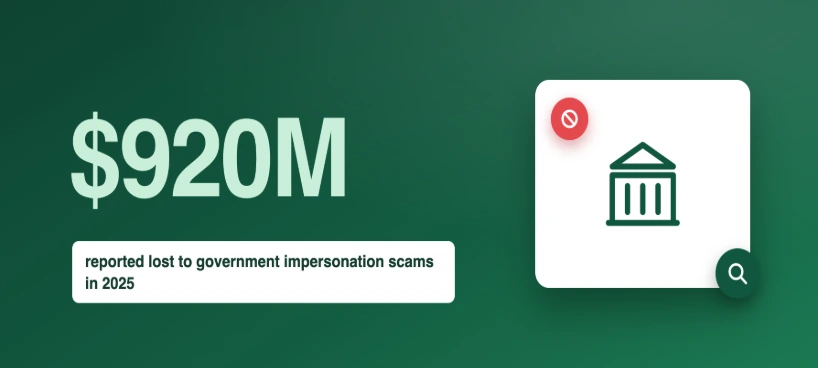
Got a call about back taxes? The IRS never calls first. Here's how the scam works, the fake agency names to know, and what to do next.
How to find someone on Discord with or without their username, what their profile still reveals, and how to check they're who they say before you trust them.