Start Outside, in Daylight
Never inspect a car at night, in the rain, or under a dealership's floodlights. Wet paint hides filler work and overhead lighting flattens everything.
Walk the vehicle’s perimeter twice, once from about 10 feet back and once close in. From a distance you are watching how light travels along the body. A repainted panel usually reflects light slightly differently from the one next to it. The mismatch shows up most clearly along the shoulder line as you move.
Then get close and check:
- Panel gaps. Run a finger along the seams between the hood, fenders, and doors. Gaps should be even and consistent side to side. Uneven gaps often point to a collision repair, or a frame that never came back true.
- Overspray. Look at the rubber door seals, the trunk weatherstripping, and the inside of the fuel filler door for a dusty haze of paint. Factories mask these areas, but body shops frequently do not.
- Tire wear. All four should wear evenly. Wear concentrated on one edge suggests alignment or suspension trouble. Also make sure the tire brands match.
- Glass date codes. Every window carries a small stamp with the manufacturer and date. If three match the model year and one does not, that window was replaced. Ask why.
- Rust. Surface rust on a bolt head is normal. Bubbling paint along the door bottoms, wheel arches, or rocker panels means rust working outward from the inside.
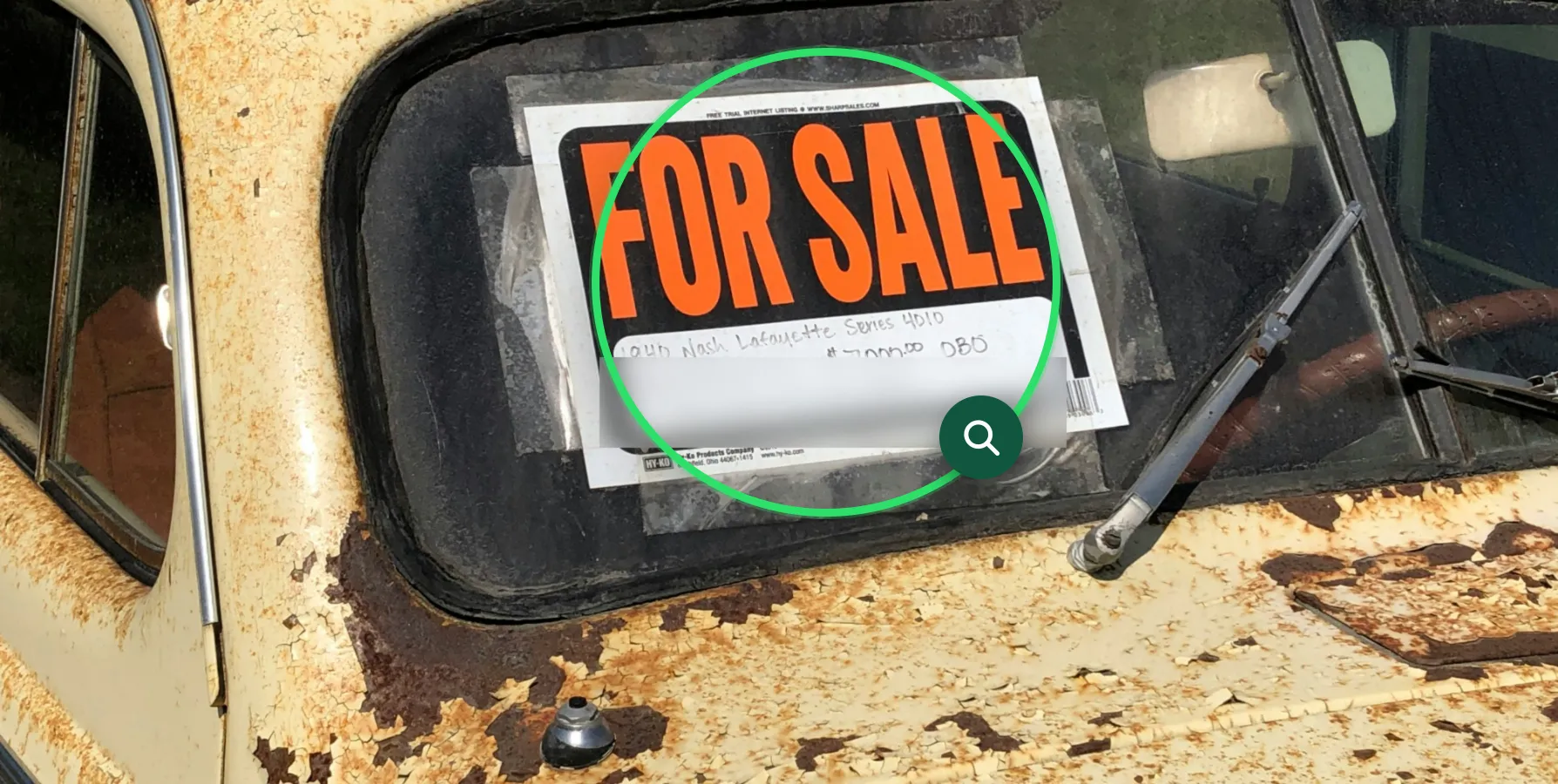
A car that shows overspray, replaced glass, and shifted panel gaps together has been rebuilt, no matter what the paperwork says. Repaired salvage vehicles are often cosmetically excellent, since looking good is the entire point of repairing them. Our breakdown of salvage and rebuilt titles covers what that does to insurance and resale value.
Under the Hood and Underneath the Car
You don’t need to be a mechanic, but you do need to understand the basics.
Pull the oil dipstick. Oil should be brown or black and slick, never milky or foamy, which can indicate coolant mixing where it should not. Check the coolant reservoir for an oily film, and note whether the transmission fluid smells burnt.
Look out for an engine bay that is a little too clean. A steam-cleaned engine on a 12-year-old car often means a leak was recently washed away. Instead, look at where the car is parked, since fresh drips on the ground tell you more than the engine bay does.
Then look underneath the car with a flashlight for wet seepage around the oil pan and transmission, scraped metal along the frame rails, and rust that flakes rather than dusts. Make sure to bring your own flashlight.
Inside the Cabin: What Water Damage Looks Like
Water damage is the most expensive thing a used car can hide, because it destroys wiring and electronics slowly, often months after the sale.
Lift the floor mats and the trunk liner, then run your hand into the spare tire well. Silt, fine grit, or a faint tide line on the carpet backing is a red flag. Check the seat rails and seatbelt bolts for rust in a car whose exterior shows none. Pull the seatbelt all the way out and look at the section that normally stays wound inside the pillar, since a water line often shows there.
Then test every electrical item you can reach. Windows, locks, mirrors, seat motors, the screen, the rear defroster, the sunroof. Flood cars tend to fail in small, scattered ways.
Finally, compare wear against the odometer. A steering wheel worn shiny, a brake pedal gone smooth, and a collapsed driver's seat bolster do not belong on a car showing 48,000 miles. Wear patterns are much harder to reset than a digital display.
What to Look for on the Test Drive
Ask to start the car cold. A seller who warms the engine before you arrive has removed the single most informative 30 seconds of the whole visit. Cold starts surface rough idle, blue or white exhaust smoke, and startup rattles that vanish once everything expands.
Turn the radio off for the entire drive. Then drive for at least 15 minutes, including slow turns and highway speed, and note whether the steering wheel shakes above 60 mph and whether the transmission shifts cleanly or hunts between gears.
Watch the dashboard on startup. Warning lights should illuminate briefly, then go out. A check engine light that never comes on at all can mean the bulb was removed. Bring a cheap OBD-II scanner if you can, since recently cleared codes are a red flag, as well.
Everything above is what the car tells you without the seller's cooperation. For advice on a conversation with the seller, our article on questions to ask when buying a used car covers ownership history, warranty terms, and the paperwork you should ask to see in writing.
What to Look for in the VIN and on the Listing
The VIN should match itself everywhere. Check it on the driver's side dashboard through the windshield, the door jamb sticker, and the title document. A plate that is scratched, dulled, or sitting on fresh rivets should be cause for ending the viewing and not buying the car.
You should also verify the vehicle and the listing independently:
- Check open safety recalls free of charge using NHTSA's VIN recall lookup. Recalls on older vehicles frequently go unrepaired.
- Look the VIN up through the Department of Justice's National Motor Vehicle Title Information System, the federal system that records title brands and total-loss reports across all 50 states.
- Run a full VIN lookup, which may surface reported title branding, prior ownership transfers, documented insurance and damage claims, lien records, and odometer discrepancies where they appear in participating databases.
The listing deserves the same treatment as the car. Photos lifted from an older advertisement are common on marketplace apps, and dropping one into a reverse image search will show you whether the same shots appear elsewhere online. If the number on the listing looks recycled between ads, a reverse phone lookup may return the name and carrier tied to it where those details appear in public records.
The Non-Negotiables
Three things end a viewing regardless of how good the car looks.
- A seller who sets conditions on where and by whom the car may be inspected.
- A title that is not in the seller's name.
- A VIN that does not match across the car and the paperwork.
Everything else is negotiable. AAA puts a transmission replacement at $1,200 to $6,000 and an engine replacement at $4,000 to $10,000, which is the arithmetic behind paying a mechanic a couple of hundred dollars first.
When the car itself has passed, put the VIN through ClarityCheck's VIN lookup and compare the records to what you found.