
Find Someone on Dating Sites by Phone Number
Learn how to find someone on dating sites by phone number, which free checks confirm an account, and why a clean result doesn't necessarily mean anything.
Guides
Luke Belfield
Sep 16, 2026 • 6 min read
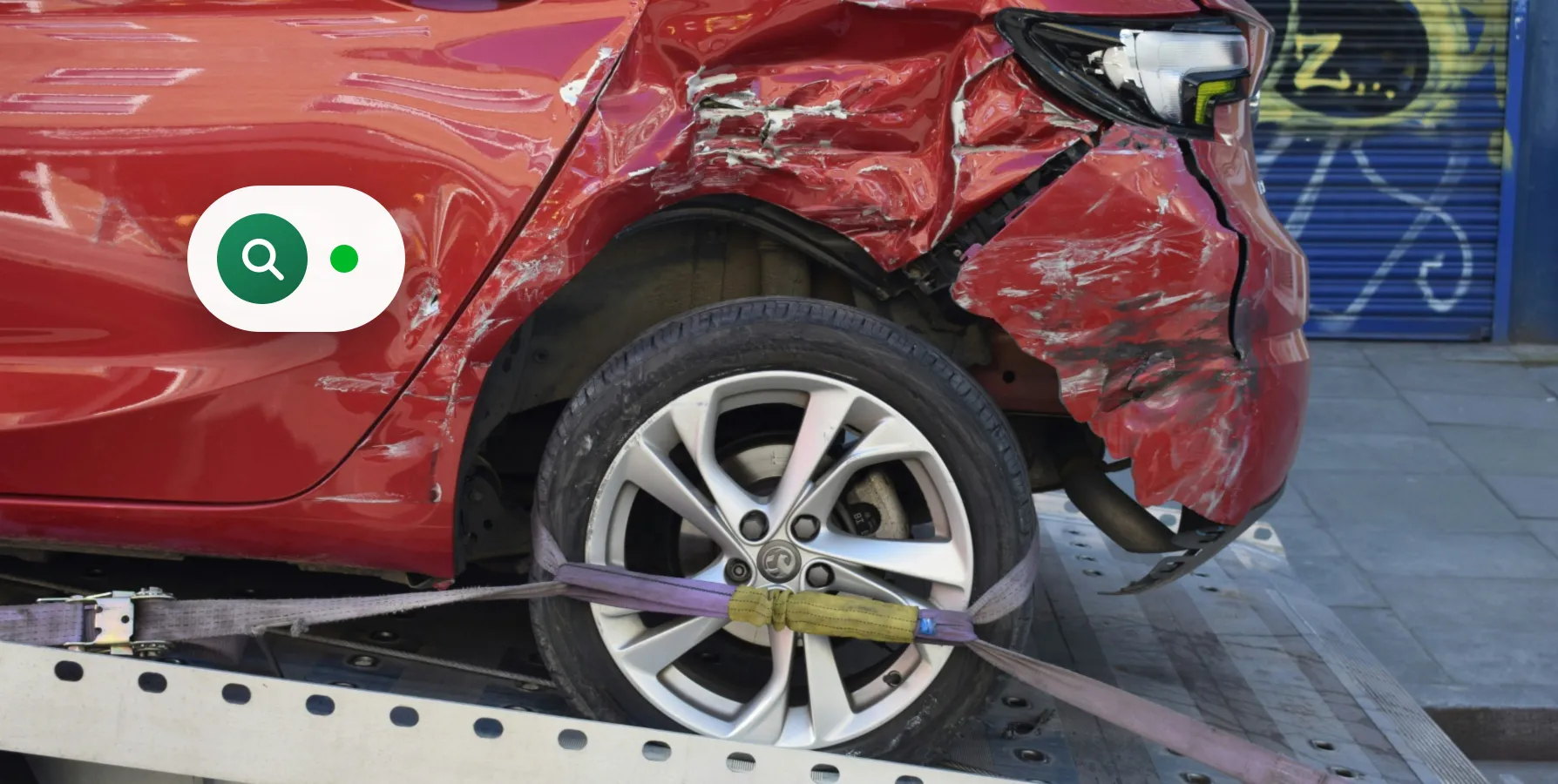
The listing looks like a typo. It’s a three-year-old SUV with 40,000 miles, priced at $9,000 under everything else on the lot. Then you reach the last line of the description. In gray text at the bottom of the page, it reads, “Salvage title.” That’s the reason for the lower price.
A salvage title is a brand a state adds to a vehicle's title after an insurer declares the car a total loss, meaning repair costs exceed what the car was worth. You can’t legally register or drive a salvage vehicle until it's repaired, inspected, and reissued as a rebuilt title.
A total loss doesn't mean the car was crushed or destroyed. It means repairing it cost more than the insurer was willing to pay. The damage might be a caved-in quarter panel or two feet of floodwater in the footwell.
The U.S. Department of Justice states that "one state may examine and brand a damaged vehicle as 'salvage,' while another state may not because the damage may not reach a certain dollar or value threshold required by that state's laws.”
Here are a few examples:
| State | Total loss threshold |
|---|---|
| Oklahoma | 60% of fair market value |
| Nevada | 65% of fair market value |
| Iowa | 70% of fair market value |
| Florida | 80% of replacement cost |
| Texas | Repair cost exceeds actual cash value |
Texas goes further and excludes "sudden damage caused by hail" from its statutory definition of damage. A hail-totaled car in Texas may never carry a salvage brand at all.
A salvage brand also won't tell you what happened to the car. Texas alone recognizes six NMVTIS salvage brands covering collision, fire, theft recovery, and abandonment. Car-shopping and automotive information website Edmunds adds flood, hail, vandalism, and lemon-law buyback, and notes most states don't distinguish between them on the document. There’s also a non-repairable or parts-only certificate, which means the state won't let the car be restored at all.
Some states also bar the sale of salvage vehicles to anyone but licensed dealers, repair shops, or recyclers. This means a private seller may not legally be able to complete that sale.
You can't clear a salvage brand. No state has a process for removing a salvage brand and restoring a clean title.
"Clearing" a salvage title refers to the process of converting it to a rebuilt title by repairing the car, passing inspection, and getting a document that lets you register and drive it. That's achievable, but a rebuilt brand is also permanent and follows the VIN to every future owner. Anyone advertising a service that removes a salvage brand outright is describing title washing, which is fraud.
You can’t drive a car with a salvage title, but you can drive with with a rebuilt title. However, the more important difference is what the inspection actually verifies.
In Iowa, for example, it's a salvage theft examination. This costs about $50, takes about 45 minutes, and confirms no one used stolen parts to fix the car. Iowa's administrative code says the exam "is not a safety inspection" and the certificate "shall not be construed by any court of law to be a certification that the vehicle is safe to be operated."
A rebuilt brand tells you a state checked the paperwork, but it doesn’t alway tells anything about the car’s full condition. Check out our full comparison in our article on salvage vs. rebuilt titles.
Kelley Blue Book calls a clouded title a "permanent negative effect on the value of a vehicle" and puts the rule of thumb at 20% to 40% off Blue Book value. Edmunds won't publish values for branded-title vehicles at all and estimates up to 50% off the True Market Value of an identical clean-title car. That penalty follows the car to every future owner, including you when you sell. Additionally, most franchise dealers won't take one as a trade-in.
No. Progressive plainly states that you cannot get insurance for a salvage title car. It isn't roadworthy, so there's nothing to insure. Coverage only becomes possible after it's rebuilt and retitled.
Sometimes. A rebuilt vehicle typically qualifies for liability plus whatever your state mandates , provided your insurer accepts rebuilt vehicles at all. Some will decline outright.
Comprehensive and collision insurance are the sticking point here. Progressive says coverage "may or may not" be available, because a rebuilt car may still carry unrepaired damage, making it hard for an adjuster to separate old damage from new. You can expect to pay more, as well.
Rarely. Carfax reports that banks may avoid lending on rebuilt title vehicles, because there might be weakened structural integrity, costly future repairs, and higher repossession risk on a car that may not outlast the loan. If you need financing to make the numbers work, a car with a rebuilt title probably isn’t for you.
A brand only protects you if it survives the trip across state lines. Title washing strips that history by retitling the car in a state that doesn't check with every previous issuing state. This is fraud. In March 2026, the Pennsylvania Attorney General charged an authorized PennDOT tag agent over falsified paperwork for 65 stolen vehicles worth more than $3.8 million.
Flood cars are the classic washed vehicle. Carfax estimated up to 45,000 vehicles were flood-damaged in mid-2025 storms, on top of as many as 482,000 water-damaged cars already on U.S. roads.
It can work if the damage is documented and cosmetic, an independent mechanic puts it on a lift before you pay, you've confirmed in writing that an insurer will cover it, you're paying cash, and you plan to keep it for years rather than flip it.
You should walk away if the seller is vague about the cause, there's no repair documentation, the car was flood-branded, the title says non-repairable, the price is only slightly below clean-title comparables, or you need financing.
The discount has to cover a permanent resale penalty, thinner insurance options, and repair risk nobody inspected. Frequently it doesn't. Run through our used car buyer's checklist first.
Start with the free federal tools. NMVTIS gives consumers title brand history, odometer readings, and insurer total-loss records through approved providers, although the DOJ warns a search can return a false negative. NICB VINCheck is free for five searches a day and covers insurers representing roughly 88% of the personal auto market.
Then, you should widen the picture. A ClarityCheck VIN lookup aggregates public and commercial records, including auction and insurance databases, and may surface title status, reported damage events, liens, theft reports, and odometer discrepancies where those records exist. Nothing is guaranteed to return, and no report replaces a mechanic on a lift, but can tell you which questions to ask before you drive a few hours to see a car in person. Apply the same scrutiny to the seller. Our guides on background checks, phone numbers, and addresses cover that side of things.
Learn how to find someone on dating sites by phone number, which free checks confirm an account, and why a clean result doesn't necessarily mean anything.
Should you call someone who blocked you? What *67 really does, why voicemail still lands, what never works, and the legal line you should not cross.

Can you insure a car with a rebuilt title? Most carriers write liability, fewer write full coverage. Here’s what it typically costs, who covers it, and the payout catch.